Choosing a Collage Surface: Paper, Card or Fabric
Choosing a collage surface by feel and flexibility helps you build compositions that suit your materials, from crisp paper layers to soft, tactile fabric.
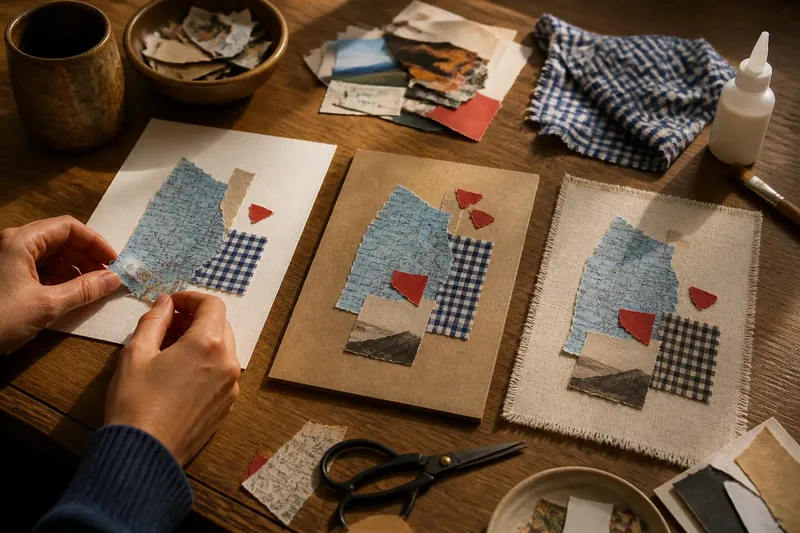
You have a small pile of torn magazine pages, a scrap of patterned cotton and a blank surface waiting nearby. Choosing a collage surface can shape what those pieces seem to do: paper encourages crisp edges, card gives a composition a firm stage, and fabric brings a softer, more tactile presence. Start with the effect you want, then let the material guide your arrangement.
Begin with the feeling
Before reaching for glue, describe the intended mood in plain words. Should the finished collage feel airy, orderly, bold, worn, soft or deliberately uneven? This is not a test with a right answer. It is a way to notice which surface already carries some of the character you want.
Paper is usually the natural choice for fine detail and layered edges. It can be cut cleanly, torn into feathery shapes or folded into small planes. A sheet of plain drawing paper keeps the composition visually light; a printed page brings its own colours, type and marks, so each new piece has to share attention with them.
Card feels more assertive. Its stiffness can make a collage seem graphic or poster-like, and it holds broad shapes without the visual softness of a flexible sheet. The exposed edge also becomes part of the work: a neat, straight outline can frame the composition, while an uneven edge can make it feel less formal.
Fabric introduces texture before you add a single image. Cotton can read as familiar and domestic; a loosely woven scrap may show its grain and soften a hard-edged arrangement. Cloth also tends to invite shapes that overlap, drape or appear to continue beyond the edge, rather than pieces that sit neatly in a flat grid.
Read the materials
Gather a few likely pieces and place them beside each other, not on the chosen backing yet. Look at their thickness, surface and edge. A glossy clipping can feel out of place against fuzzy cloth, while a rough paper fragment may sit comfortably beside a woven scrap. These differences can be the point, but it helps to notice them early.
Consider the weight of the pieces you plan to attach. Thin paper can disappear into a pale backing or curl visually against a dark one. A sturdy card shape may dominate light paper. Fabric can add a substantial-looking patch even when its colour is muted. The backing should support the most prominent pieces without competing with them.
Also notice whether the surface has a strong pattern or texture of its own. A patterned card beneath busy cut-outs can make the whole arrangement feel crowded. Plain paper offers room for detailed imagery. A textured cloth backing may be enough on its own for a restrained collage, with only a few contrasting shapes needed to give it direction.
Try the arrangement
Lay out your pieces without attaching them. Begin with the largest shape, then add smaller forms around it. Leave gaps where you want the backing to show. Move one piece at a time and watch how its edge changes the balance: a pointed triangle can lead the eye, while a broad rounded form can settle a restless cluster.
Now compare the same loose arrangement on each surface that seems plausible. You do not need to reproduce every detail. Transfer the largest pieces first, then use small scraps or your hand to suggest the rest. On paper, you may find that narrow gaps and delicate overlaps feel natural. On card, larger blocks and clear margins can give the composition room to breathe. On fabric, a slightly irregular grouping may echo the movement of the weave.
Say you have a torn blue map, two small red paper shapes and a strip of checked cotton, and you want the result to feel like a lively, collected keepsake. On a smooth sheet of drawing paper, the map’s printed lines may stay legible and the red shapes can act as sharp accents. On card, the same pieces could read more like a bold graphic, especially if you leave a broad border. On plain cotton, the checked strip may belong naturally, while the paper pieces become crisp interruptions in a softer field. The expected visible difference is in the relationship between the printed marks, the border and the cloth’s weave—not in the pieces themselves.
Choose a working surface
Pick the surface that supports your intended composition, not the one that sounds most special. If you want a delicate cluster of cut images, paper is a flexible starting point. If you want a firm, framed arrangement, card gives you a clearer boundary. If you want tactile contrast or a sense of softness, fabric may carry more of the idea before the collage is complete.
Let the shape of the backing help, too. A narrow rectangle can suggest a sequence or a pathway. A square can make a cluster feel contained. An irregular piece of card or cloth can leave the composition open-ended. These are invitations rather than rules; you can always crop or cover an edge if the first arrangement feels too settled.
Think about how the surface behaves under your chosen adhesive. Paper can buckle if it becomes too wet, and some cloth may shift or absorb adhesive unevenly. Card is firmer, but a heavily textured piece can make close contact harder. Check the product label and the material maker’s directions before choosing an adhesive, especially when combining unlike surfaces. For delicate or valuable materials, ask a conservator or another qualified professional before applying anything permanent.
Attach with intention
Once the arrangement feels right, work from the largest pieces towards the smallest. Keep a quick reference by taking a photograph or marking the position of a few key shapes on a separate note. Then lift one piece, apply adhesive in a way suited to its material, and return it before moving on. Avoid flooding thin paper; excess moisture can distort it. If a piece needs pressure to lie flat, use a clean sheet between it and your hand so the surface does not pick up marks.
For fabric, take care that loose threads do not become trapped where you want a clean edge. You might leave a frayed margin visible if it suits the work, or trim the piece for a more precise look. Neither finish is automatically better. The useful question is whether the edge supports the composition’s character.
Keep some of the backing visible. Empty areas can help the eye distinguish one layer from another, and they let the material contribute without demanding attention everywhere. If the collage feels crowded, first remove or shift a piece rather than adding another decoration. A small change in spacing may be all it needs.
Which surface suits your idea?
Is paper best for detailed collage?
Paper is often a good fit when you want crisp cuts, fine torn edges or visible printed detail. Choose a backing whose tone and texture do not obscure the images you care about.
When should I choose card?
Choose card when a firm outline and a more graphic arrangement suit the work. Its visual weight can hold bold shapes, but a busy card pattern may compete with intricate pieces.
Can fabric work in a paper collage?
Yes, fabric can create a useful contrast with flat printed or painted pieces. Keep the combination intentional: one cloth patch can become a focal point, while many different textures may make the surface feel unsettled.
What if I cannot decide?
Make a small loose arrangement on separate scraps of paper, card and fabric, then compare the feeling rather than judging which version is more polished. Pick the one that makes the intended mood easiest to recognise.
Leave room to revise
Not every material needs special treatment. It is rarely worth spending time searching for a perfectly matched backing when a plain, sound piece of paper or card already lets the composition read clearly. Save the effort for a real problem, such as an image disappearing into a similar colour or a fabric edge pulling attention away from the main shape.
Give the assembled work a final look from a little distance. Notice where your eye lands first, whether the gaps feel deliberate and whether the surface still contributes to the mood you chose at the start. If the answer is yes, the material has done more than hold the pieces together: it has become part of the collage’s voice. Choosing a collage surface is ultimately a decision about how the work should meet the eye and hand, not a contest between paper, card and fabric.