What a Worktable Makes Possible
A worktable makes creative work easier to begin and resume by keeping useful tools visible, surfaces ready and enough clear space for the next move.
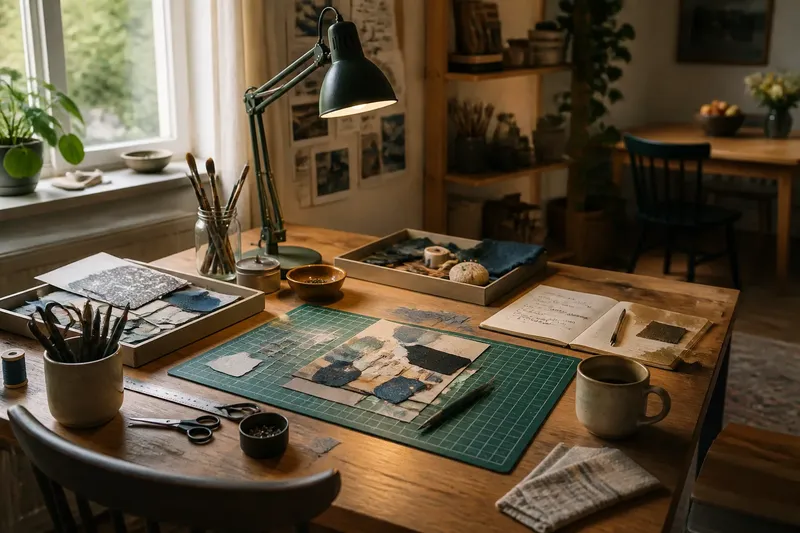
A worktable can turn a half-formed idea into something you can start before the kettle boils. For a creative worktable, the arrangement matters less than whether the tools, surface and open space suit the next task. A place to cut paper, mend a sleeve or sort found objects need not look like anyone else’s studio.
What makes a table usable?
A usable table gives the current activity a clear landing place. That might mean a dining table with a cutting mat on one end, a small desk beside a window, or a sturdy board laid across trestles. The test is simple: can you reach the working area, set down what you need, and leave the materials without blocking the room?
Start with the task rather than an idealised picture of a studio. Drawing calls for a steady, uncluttered patch; hand sewing needs space for fabric and thread; assembling a small sculpture may need room to spread components out. The table does not have to hold every tool you own. It needs to support the work you are likely to pick up next.
Where should tools go?
Place frequently used tools close enough to reach without interrupting the task. A pencil pot, scissors or a ruler might sit at the side of the work area, while rarely used supplies can stay in a drawer or labelled box. Keep the active materials together so the table reads as an invitation rather than a storage surface.
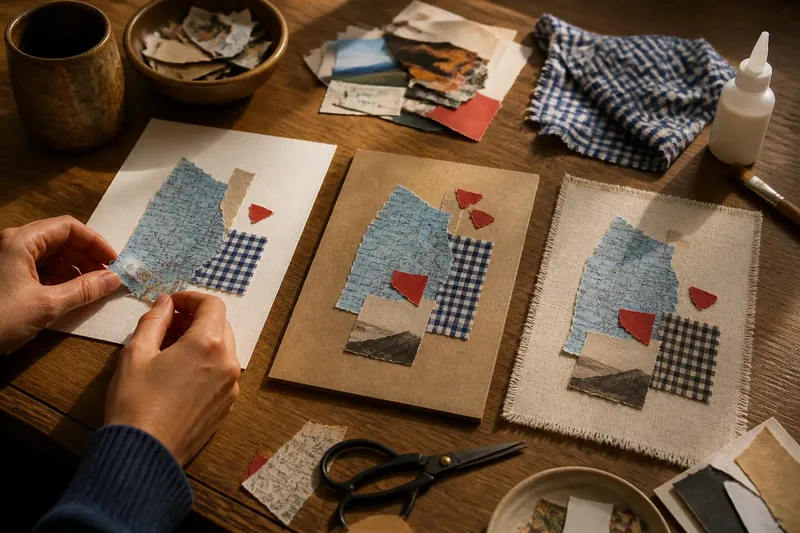
Think about the order of actions. If you are making a paper collage, you may reach for source images, scissors, adhesive and then a place to set pieces aside. Arrange those items in that rough sequence, leaving the centre open for composing. For textile mending, a shallow tray can hold the current garment, needles and thread; it can move off the table when supper is served.
Containers should make tools visible or easy to retrieve, not bury them. A jar works for brushes if the handles remain accessible. A small lidded tin can keep pins together, but an opaque box packed with mixed supplies may turn a quick start into a rummage. Use clear containers only when their contents are tidy enough to be useful.
How much clear space?
Leave enough open surface for the work’s next action, not every possible action. A sheet of paper needs room to turn; a collection of objects may need a clear patch where you can compare and group them. If the centre is covered by permanent storage, it is harder to begin without first moving something.
Say you have a narrow desk and want to make small paper constructions. Keep a cutting mat, a tray of scraps and a pencil within reach, but store reference books on a nearby shelf. When you sit down, the mat is ready for cutting and the middle remains free for arranging pieces. The likely benefit is a more direct transition from intention to making, without needing a larger room.
Open space need not mean an empty table. A work in progress can occupy part of it, provided there is a safe, ordinary place for the next tool or component. If the project must be cleared away, a tray or flat box can preserve its arrangement and make it easier to resume.
How can a table invite a return?
Make the unfinished work legible to your future self. Leave a note with the next small action, such as “trim the blue edge” or “try the larger button”. Keep that note beside the materials rather than relying on memory. A photograph can help if the arrangement itself matters, but it is not necessary for every project.
Choose a stopping point that leaves the work in a manageable state. Put loose parts in a dish, cap pens and gather scraps into a tray. Avoid packing everything away so thoroughly that restarting requires a fresh search. At the same time, a shared dining table may need to be cleared; a portable project box can hold the work without claiming the whole room.
Light and seating affect whether a worktable feels inviting, too. Use a task lamp if the room’s light leaves shadows over detailed work, and check that your chair lets you sit comfortably for the activity. You do not need specialist furniture to make a modest table useful, but an unstable surface or awkward reach can distract from the work.
Which setup suits your room?
The right arrangement depends on the room’s other jobs. In a shared kitchen, a portable tray and wipeable mat can make a temporary work area. In a bedroom corner, a compact shelf above the desk can keep supplies nearby while preserving the surface. In a communal studio, mark out a personal zone with a tool roll or shallow box, then leave shared equipment accessible to others.
Consider what needs to stay visible, what must be protected, and what can be moved. Wet paint, damp clay or sharp tools may call for a different surface or storage arrangement from dry drawing materials. Follow product labels and manufacturer instructions where they apply, and use local guidance for shared spaces.
It is not worth arranging every object by colour or buying matching containers before you know what the work needs. A useful setup often begins with the tools already at hand and changes after you notice what keeps interrupting you. A misplaced ruler may need a home; an elaborate drawer system probably does not.
What should you ask yourself?
Does a small table work for creative projects?
Yes, if the task fits the available surface and you can keep the active materials together. A board, tray or cutting mat can extend a small work area without requiring a permanent studio.
Should tools stay out between sessions?
Leave out only what is safe and practical in your household or shared space. A contained project tray can keep the work ready while making it easy to move or cover.
What belongs in the centre of the table?
Usually, the centre is most useful as working space. Keep the main surface clear enough for the next action, and place tools at the edges or in a nearby container.
How do I choose a surface protector?
Match it to the materials and the table beneath it: a cutting mat protects against blade marks, while a washable cover may suit messy work. Check the product directions and the table’s care guidance before using adhesives, paint or heat.
A creative worktable is less a finished arrangement than a helpful relationship between the work and the room. Keep the next tool easy to reach, leave a place for the work to unfold, and make the unfinished part clear enough to welcome you back.